Every enterprise today is part of a vast, interconnected ecosystem. Whether you’re a fast-growing startup or a global enterprise, chances are you depend on a web of third-party administrators to keep your IT business moving forward. These partnerships fuel innovation and efficiency, but they also introduce new layers of risk.
It’s no longer enough to treat third-party risk as a routine compliance exercise. When third-party administrators have access to your systems, your data, and sometimes even your customers, the stakes are too high. A single oversight can disrupt operations, damage your reputation, or trigger regulatory headaches that linger for years.
So how do IT businesses stay ahead of these challenges? In this blog post, we’ll break down a practical, proven approach to ServiceNow TPRM.1 You’ll find four essential steps drawn from real-world experience to help you identify, assess, and manage third-party risks with confidence at every stage of the third-party relationship.
What are the Four Essential Steps of ServiceNow TPRM?
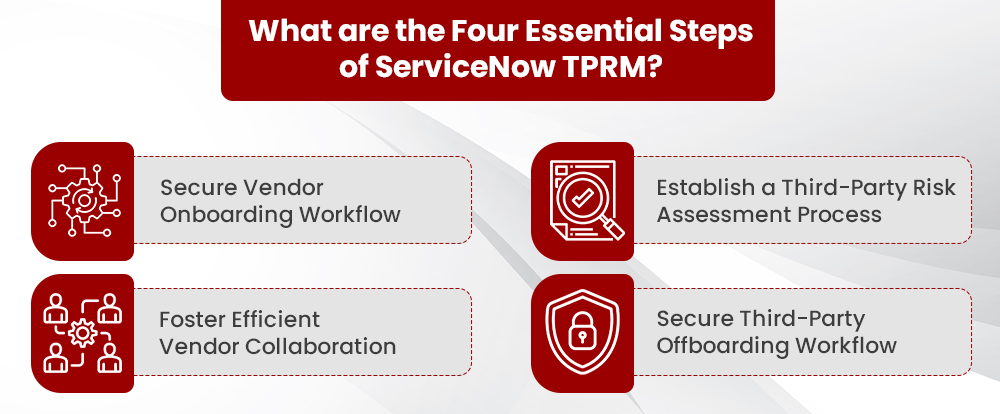
A structured approach to managing third-party risk helps enterprises minimize exposure, ensure compliance, and build resilient partnerships. Here’s how leading enterprises are getting it right:
1. Secure Third-Party Onboarding Workflow
A robust onboarding process is your first line of defense against third-party risk. It’s not just about collecting documents or ticking boxes, it’s about building a clear, consistent, and efficient system that sets up the tone for every third-party relationship.
- Centralize Vendor Information: Use a single, secure platform to track everything from compliance records to contract terms.
- Go Beyond Checklists: Conduct thorough due diligence, reviewing security practices, privacy policies, and incident history for each third‑party you work with.
- Prioritize With Risk Scoring:Not all vendors carry the same level of risk; focus your attention where it matters most.
- Automate Compliance Checks: Advanced modules such as ServiceNow TPRM, help automate onboarding workflows and verify that every vendor meets compliance and security standards from the very first engagement.
A strong onboarding process builds a foundation for transparent, accountable partnerships.
2. Establish a Third-Party Risk Assessment Process
Onboarding is only the beginning. As your IT business and the regulatory landscape evolve, so do your risks. Third‑party and supply chain attacks are now among the most common and costly threats, with over a third of breaches in 2024 linked to third‑party access, according to Security Scorecard’s Global Third‑Party Breach Report.2
- Start with Comprehensive Assessments: For third parties handling sensitive data or critical services, Conduct in-depth risk reviews. Look at technical controls, financial stability, and compliance history.
- Move to Continuous Monitoring: Annual reviews are no longer enough. ServiceNow TPRM enables timely updates, alerting you to changes in third party risk profiles or emerging threats.
- Develop Actionable Mitigation Plans: When a risk is identified, define clear playbooks for risk acceptance, reduction, or transfer, and ensure the responsible teams are prepared to execute them.
- Document Everything: Maintain detailed records of assessments, decisions, and actions taken. Comprehensive documentation supports audits, strengthens governance, and reinforces a culture of accountability.
Enterprises that treat third-party risk assessment as an ongoing discipline, not a one-time event, are best positioned to adapt and thrive.
For a deeper dive into modern third‑party risk practices, read Guide to Master ServiceNow TPRM
3. Foster Efficient Third-Party Collaboration
Strong third‑party relationships are built on trust, structured communication, and shared objectives. In an environment where third‑party exposure is a significant contributor to breaches, maintaining transparency and alignment is essential.
- Set Clear Communication Protocols: Define who communicates with whom, how often, and through which channels. Make escalation paths clear.
- Schedule Regular Reviews: Conduct periodic performance and risk assessments to ensure third parties continue to meet expectations and respond effectively to emerging threats.
- Encourage Open Feedback: Invite third parties to share their challenges and suggestions. A two-way dialogue helps you spot issues early and build stronger partnerships.
- Leverage Technology for Transparency: Modules like ServiceNow TPRM and GRC, implemented by inMorphis, bring all stakeholders onto a single, transparent platform, enabling real-time visibility into third-party performance, compliance, and risk.
When you treat third parties as true partners, you create a culture where everyone is invested in your success and your security.
4. Secure Third-Party Offboarding Workflow
Offboarding is often overlooked, but it’s critical for closing the loop on third-party risk. Regulatory scrutiny and legal action following third-party breaches have intensified, making structured offboarding essential.
- Retrieve or Destroy Data: Ensure all enterprise data is returned or securely destroyed, following strict protocols to prevent leaks.
- Revoke Access Immediately: Use automated workflows to terminate all third-party access to your systems as soon as the relationship ends.
- Conduct an Exit Review: Assess the third party’s performance, document lessons learned, and identify any residual risks.
- Update your Risk Register: Record the offboarding process and any findings to inform future third-party engagements and audits.
By following these four essential steps, enterprises can significantly reduce their exposure to third-party risks.
Conclusion
Effective ServiceNow TPRM entails more than managing the risks at the onset of the relationship. It is an ongoing activity that extends throughout the entire duration of the third-party relationship. By following this four-step approach to third-party risk management, IT businesses can help strengthen their partnerships with third-party administrators while keeping risks to a minimum.
Get in touch with inMorphis today to see how your IT business can stay a step ahead. Book a quick demo—you’ll see how our platform helps turn third-party risk into a real competitive advantage.
