Are you tired of dealing with evolving licensing models, like subscription-based, usage-based, and cloud-native, and struggling to meet compliance requirements across hybrid environments? If so, implementing SLM might just be the solution you've been looking for.
In 2026 and beyond, organizations are increasingly operating in multi-cloud and SaaS-driven ecosystems, making software license management more complex than ever. This means managing licenses now requires real-time visibility, automation, and intelligent insights rather than just manual tracking. As a result, many organizations are turning to AIOps platforms to bring predictive intelligence and automation into their software and IT operations.
That’s where modern Software License Management comes in. In this blog, we will explore the world of SLM, exploring what it entails and the key benefits of implementing it.
What is Software License Management?
Software License Management (SLM) is a crucial practice that enables organizations to effectively control, monitor, and optimize their software licenses across on-premises, cloud, and SaaS environments. It involves a comprehensive approach to acquiring, managing, and distributing software licenses throughout an organization.
The primary objective of SLM is to ensure compliance with licensing agreements while also enabling cost governance in dynamic, consumption-based pricing models. It also maximizes the value derived from software investments.
SLM today goes beyond traditional tracking, i.e., it includes automation, AI-driven insights, and integration with IT Asset Management (ITAM) and FinOps practices to deliver continuous optimization.
The Role of AI and Automation in Software License Management
In 2026, Software License Management is no longer a manual or reactive process. That’s because the integration of AI and automation has transformed how organizations manage licenses at scale. Modern SLM tools use AI to:
- Automatically identify unused or underutilized licenses
- Predict future license requirements based on usage trends
- Trigger auto-reallocation or deprovisioning workflows
Automation also eliminates repetitive tasks such as license tracking, renewal reminders, and compliance checks. This not only improves efficiency but also reduces the chances of human error.
These capabilities are increasingly being powered by advanced AIOps solutions by inMorphis, enabling organizations to move from reactive license management to predictive and self-optimizing systems.
As organizations continue to scale across hybrid and multi-cloud environments, AI-driven SLM1 ensures continuous optimization without constant manual intervention.
Challenges in Software License Management in a SaaS-First World
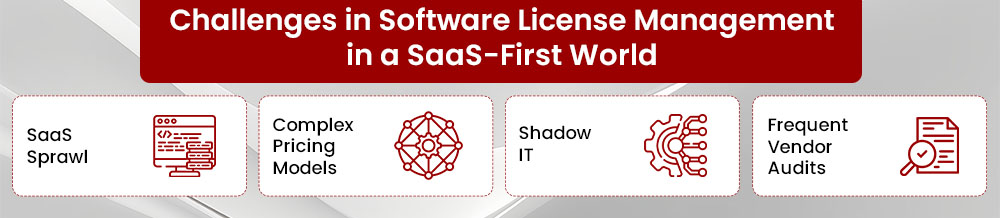
While SLM offers significant benefits, in 2026 and years beyond, organizations might face new challenges due to the rise of SaaS and subscription-based models. Some of the most common challenges that might come across in shaping the future include:
- SaaS Sprawl: Decentralized software adoption across teams leads to duplicate subscriptions, limited visibility, and uncontrolled costs.
- Complex Pricing Models: Subscription-based, usage-driven, and tiered pricing structures make it difficult to accurately track, forecast, and optimize software spend.
- Shadow IT: Unauthorized tools adopted by employees' bypass IT governance, increasing risks related to security, compliance, and data management.
- Frequent Vendor Audits: Growing reliance on cloud and SaaS solutions has led to more frequent and rigorous vendor audits, putting pressure on organizations to maintain continuous compliance.
Addressing these challenges requires a more integrated approach, combining SLM with IT Asset Management (ITAM), FinOps, and security frameworks. So, organizations that proactively tackle these issues can unlock the full potential of their software investments while maintaining control and compliance.
Key Benefits of Implementing Software License Management
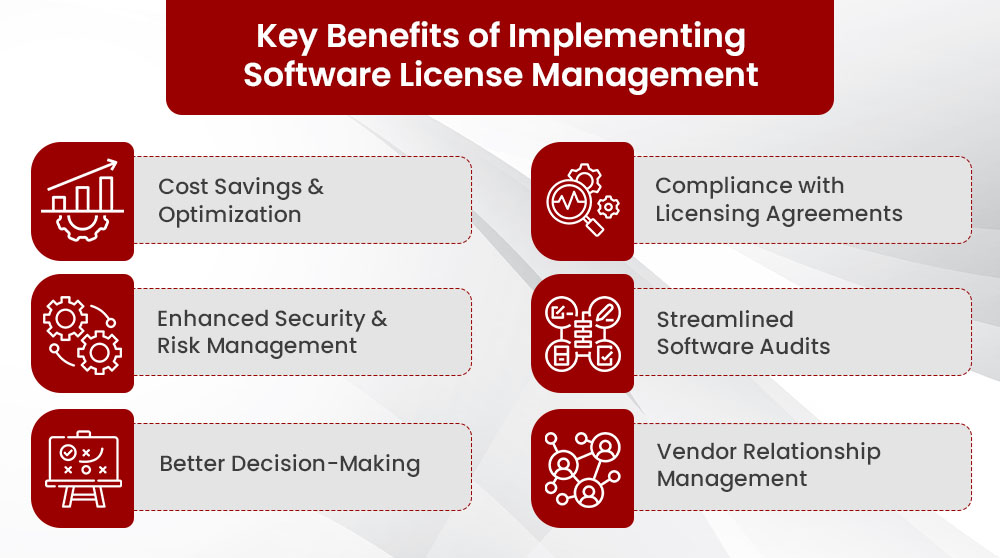
Implementing Software License Management (SLM) offers numerous key benefits to organizations. The following are six crucial advantages of effectively implementing SLM practices:
1. Cost Savings and Optimization
One of the primary benefits of SLM is cost savings through license optimization. In 2026, this goes a step further with AI-powered usage analytics and predictive recommendations. Organizations can identify underutilized or unused licenses in real time and automatically reallocate them where needed.
SLM also plays a key role in SaaS spend management and FinOps strategies, helping organizations control subscription sprawl and avoid hidden costs from auto-renewals or over-provisioning. When combined with an AIOps platform, organizations can further enhance cost optimization through real-time insights and automated decision-making.
2. Compliance with Licensing Agreements
Compliance with software licensing agreements is critical to avoiding legal and financial risks, especially in an era of frequent vendor audits and complex SaaS contracts. Modern SLM solutions provide continuous compliance monitoring instead of periodic checks, ensuring organizations stay audit-ready at all times. This reduces the risk of non-compliance in rapidly scaling cloud environments.
3. Enhanced Security and Risk Management
SLM now plays an even bigger role in cybersecurity. By integrating with security and vulnerability management tools, organizations can track outdated or unsupported software versions in real time. Additionally, SLM helps manage shadow IT and unauthorized SaaS usage, which has become a major risk in distributed and remote work environments.
4. Streamlined Software Audits
Software audits can be time-consuming and disruptive for organizations. Implementing SLM provides a significant advantage during audit processes. By maintaining accurate and up-to-date license records, organizations can easily demonstrate license compliance and respond to audit requests efficiently. SLM tools facilitate the collection of comprehensive license usage data, enabling organizations to generate detailed reports and evidence of compliance. This streamlines the audit process, reduces the administrative burden, and ensures a smoother experience for internal and external audits.
5. Better Decision-Making
SLM empowers organizations with advanced insights into software usage patterns. In 2026 and years beyond, this includes AI-driven dashboards, forecasting models, and automated reporting, enabling faster and more strategic decision-making. Organizations can now align software investments with business KPIs, workforce trends, and digital transformation goals, ensuring maximum ROI.
6. Vendor Relationship Management
SLM facilitates better management of vendor relationships by providing data-backed negotiation power. With detailed usage insights, organizations can move toward value-based contracts and flexible licensing models. It also enables better collaboration with vendors in enterprise-wide digital transformation initiatives, rather than just transactional engagements.
Turning Insight into Action
As we move into a future defined by cloud-first strategies, AI adoption, and subscription-based ecosystems, Software License Management is no longer optional, it’s a strategic necessity.
By embracing modern SLM practices, organizations can gain complete visibility, control costs, strengthen security, and stay continuously compliant in an increasingly complex software landscape.
SLM is no longer just about managing licenses, it’s about driving smarter business outcomes in a digital-first world. With the growing adoption of AIOps solutions, organizations can unify license management with broader IT operations to achieve greater efficiency, visibility, and control. So, what’s stopping you from taking control of your software ecosystem? Connect with inMorphis to explore how a smarter, AI-driven approach to Software License Management can bring clarity, control, and long-term value to your organization.
Reference:
