
Today’s enterprises are investing heavily in digital transformation. From automating workflows to improving customer service and optimizing IT operations, businesses want measurable returns. That’s where the Value Realization Framework comes in—a structured method to ensure that initiatives are aligned with business outcomes and deliver tangible value.
However, most companies don’t realize its full potential. They put frameworks in place, assign ownership, and track KPIs, but still struggle to connect efforts with results. The core issue? Lack of real-time data visibility.
Platforms like ServiceNow, which power digital workflows across IT, HR, risk, and operations, offer a unique advantage: the ability to centralize and visualize data in real time. Without that visibility, even the best-designed value frameworks risk becoming static documents rather than dynamic enablers of value.
In this blog, we will understand what the value realization framework is, why enterprises fail to get RoI from a VRF, and the importance of real-time data visibility in a VRF, and how to build it.
Common Reasons the Value Realization Framework Fails
Despite good intentions, many enterprises face consistent challenges with their value realization frameworks:
a. Lagging or Stale Data
When decision-makers rely on data that is days or weeks old, they can't respond in time to address deviations or inefficiencies. Lag time erodes impact.
b. Disconnected Systems
Without integration across tools and departments, data remains siloed. This makes it hard to form a unified picture of performance, leading to blind spots.
c. Poor Metric Selection
Many teams measure activity instead of outcomes. Tracking the number of tasks completed doesn’t tell you whether you’ve achieved the intended business value.
d. Lack of Continuous Monitoring
Instead of being a continuous cycle, value realization is often reviewed just once, which leads to missed opportunities for course correction.
e. Insufficient Accountability
If no one is responsible for monitoring value metrics and driving outcomes, progress stalls. Ownership is crucial.
Also, read How KPIs Drive Value Realization Framework?
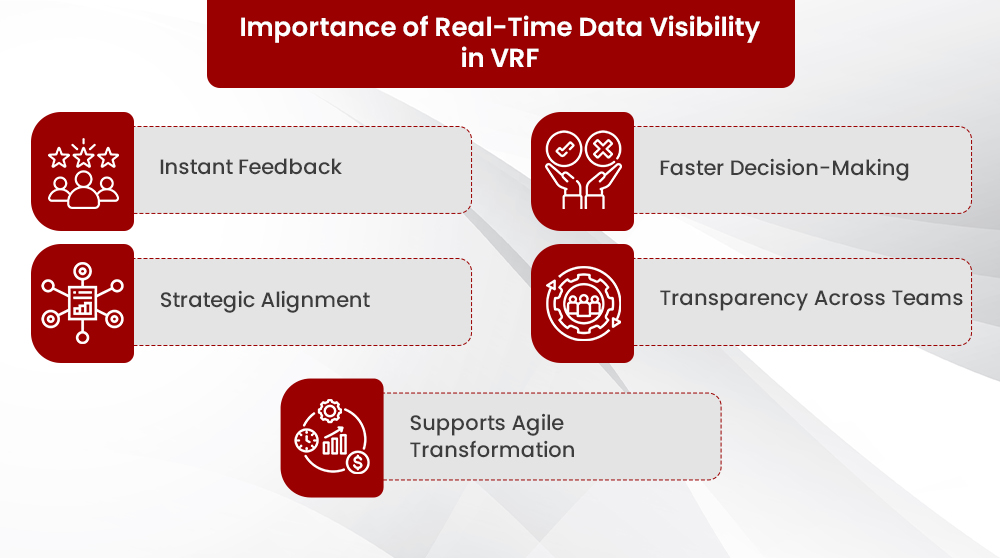
Importance of Real-Time Data Visibility in VRF
Real-time visibility transforms the value realization framework from a reactive to a proactive approach. Here’s how:
a. Instant Feedback
With real-time dashboards, teams can continuously monitor progress, not just during quarterly reviews. This allows immediate adjustments when things go off track.
b. Faster Decision-Making
Executives can make informed choices quickly based on live data, reducing the risk of costly delays.
c. Strategic Alignment
Live data enables you to directly tie daily actions to strategic business goals, ensuring the organization remains aligned and moving in the same direction.
d. Transparency Across Teams
When data is visible across departments, everyone can see how their work contributes to shared goals, thereby enhancing collaboration and accountability.
e. Supports Agile Transformation
Real-time visibility fosters an agile mindset, enabling quick responses to change rather than getting stuck in static plans.
Building a Real-Time Value Realization Framework Model
a. Define Value in Business Terms
Don’t just track activities, define success in terms of business value, such as customer satisfaction, operational savings, or risk reduction.
b. Use ServiceNow as the Backbone
ServiceNow offers out-of-the-box tools, including Performance Analytics, Strategic Portfolio Management (SPM), and Continuous Improvement Management, that help you measure and track value continuously.
c. Break Down Silos
Connect your systems to ServiceNow to establish a single source of truth for data, processes, and operations. Use Service Graph or Integration Hub to connect data across ITSM, HRSD, GRC, and more.
d. Automate Alerts and Reporting
Utilize workflows to flag risks promptly, send alerts to the relevant teams, and automate the reporting of key value metrics through real-time dashboards.
e. Tie Metrics to Strategy
Ensure that every metric you track is tied back to a specific business goal. ServiceNow’s SPM module lets you track OKRs or business KPIs to maintain alignment with strategic objectives.
Case Studies:
AIOps-Powered HR Transformation at a Global Industrial Enterprise1
Challenges
- Fragmented HR systems across 180+ countries caused compliance complexities and inconsistent service delivery.
- Lack of a unified platform limited process automation and visibility across high-volume transactions.
- Disconnected data and workflows made it difficult to standardize KPIs and ensure operational efficiency.
- Manual processes created onboarding delays, slow ticket resolutions, and reduced employee satisfaction.
Solutions
1. Consolidated Digital HR Platform
- Deployed a centralized HR service delivery solution to unify global operations.
- Integrated multiple channels including chat, voice, email, and telephony into a seamless service layer.
2. AI-Powered Workflow Automation
- Automated over 15,000 service requests per month using bots and intelligent routing.
- Enabled guided workflows to enhance onboarding and lifecycle management.
3. Scalable Integration Architecture
- Connected cloud-based telephony and external platforms via a central integration hub.
- Achieved streamlined case routing and transparent partner collaboration.
4. Standardized Data Models and Predictive Insights
- Created unified KPIs and harmonized global processes.
- Leveraged real-time analytics and historical data to optimize service performance and enable proactive support.
Outcomes
- 1M+ hours automated, driving efficiency and scalability.
- 87% employee satisfaction, enabled by a simplified, responsive service experience.
- 40% faster onboarding through intelligent process orchestration.
- Significant reduction in manual errors, with multi-language support enhancing global accessibility.
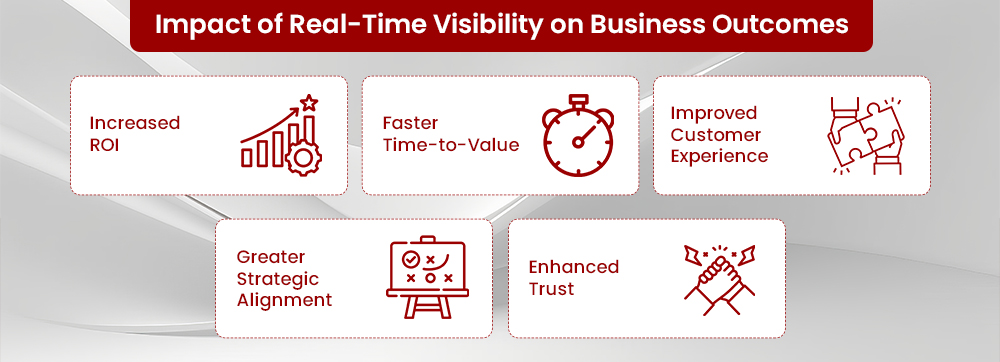
Impact of Real-Time Visibility on Business Outcomes
When value realization is built on real-time data, organizations see benefits across the board:
- Increased ROI: Real-time data enables faster decisions and better investment outcomes.
- Faster Time-to-Value: Projects deliver results quicker when progress is continuously monitored.
- Improved Customer Experience: Quick issue resolution and workflow optimization translate to better service delivery.
- Greater Strategic Alignment: Teams are more focused and efficient when they understand how their work drives business goals.
- Enhanced Trust: Leadership gains confidence in transformation initiatives backed by clear, live metrics.
Conclusion
A Value Realization Framework is essential for connecting strategy to measurable outcomes, but it cannot succeed in isolation. Without real-time data visibility, enterprises are left making decisions in the dark. By leveraging platforms like ServiceNow, companies can unlock real-time insights, align teams with strategic goals, and accelerate the realization of business value.
Investing in real-time visibility isn’t just a technical improvement; it’s a strategic necessity. Using real-time data means you don’t have to wait for monthly reports to understand performance. Instead, you can adjust your strategy as you go and actively drive more value from your investments.
Ready to turn your value realization strategy into measurable business outcomes? Partner with inMorphis to build a real-time, data-driven VRF powered by ServiceNow.
