The landscape of ServiceNow Integration has fundamentally shifted from a technical necessity to a strategic mandate. For the modern ServiceNow Developer, the work is no longer about managing simple point-to-point connections; it is about architecting the resilient data pipelines that fuel GenAI and automated workflows. This shift in the developer’s role has a direct, high-stakes impact on the broader IT Service Management (ITSM) ecosystem.
When integrations rely on bespoke logic or 'mid-server hacks,' they create a fragile environment where a single timeout doesn't just stop a ticket; it starves your AI of context and stalls your entire digital transformation. To move from manual firefighting to a true 'system of action,' teams must move beyond 'making it work' and start 'making it scale' through a structured blueprint of maintainability and security
This blog post breaks down the integration patterns that scale, the guardrails that prevent rework, and the practical choices that keep ServiceNow as your primary system of action.
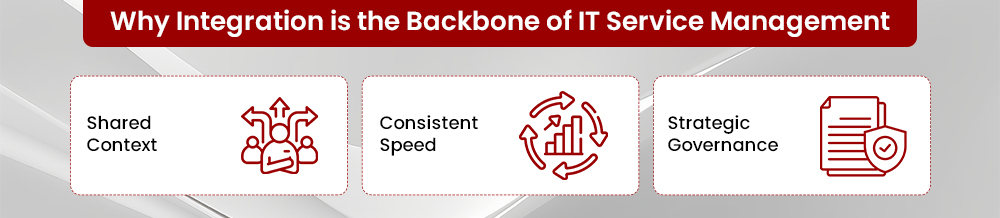
Why Integration is the Backbone of IT Service Management
Most organizations don’t lack IT service management tools; they suffer from tool isolation. Integration is the only way to turn a collection of software into a functional ecosystem.
- Shared Context: ITSM thrives on visibility. When incidents, changes, and assets operate in silos, every update becomes a manual task. Integration ensures that data is connected with workflows.
- Consistent Speed: Automation is the engine of modern service delivery. By integrating workflows across systems, actions happen predictably and at scale, removing the need for manual intervention.
- Strategic Governance: When data movement is intentional, it becomes auditable. Standardizing how systems communicate allows for better access control and more reliable compliance reporting.
ServiceNow positions Integration Hub specifically to solve this issue, moving the platform from a simple database to a connected workflow engine.1
What Integration Development Means for a ServiceNow Developer
For a seasoned developer, integration is about architecting a cohesive ecosystem where ServiceNow acts as the "system of action." To achieve this, we view development through three layers of maturity:
- Application Integration: Synchronizing records so that a change in one system is reflected in the other—essential for keeping distributed teams aligned.
- Data Integration and Extract, Transform, Load (ETL): Consolidating and transforming diverse data sources to ensure the CMDB and reporting engines are fueled by high-quality, usable information.
- Workflow Integration: The highest level of maturity, where signals from external systems trigger approvals, remediations, and notifications automatically.
A strong ServiceNow Developer mindset here is simple: don’t just move data—move decisions.
Also read, ServiceNow Developer: Navigating Challenges and Celebrating Successes, as it breaks down what the role looks like in practice.
The ServiceNow Developer’s Integration Blueprint
Integration development today is about maintainability. To avoid "fragile chaos," every integration should be evaluated through three lenses:
1. Ownership Lens: Defining the Source of Truth
Before configuring a spoke, you must define which system owns the data. With Remote Tables, developers can view external data in near real-time without importing it.1 This prevents storage bloat and ensures your CMDB remains a lean, accurate reflection of reality.
2. Interaction Lens: Latency vs. Logic
Urgency dictates the pattern. For ITSM alerts,
- Event-Driven patterns using REST API Triggers are the gold standard.
-
For high-volume data streaming, the Workflow Data Fabric supports resilient, event-driven data movement at scale.
3. Capability Lens: Speed via the GenAI Spoke Generator
The "Build vs. Buy" debate has been disrupted by the GenAI-powered Spoke Generator. Developers can now generate custom spokes from OpenAPI specifications with zero code. This allows teams to use Integration Hub for many connectors, reserving "pro-code" Scripted REST APIs only for the most complex transformation logic.
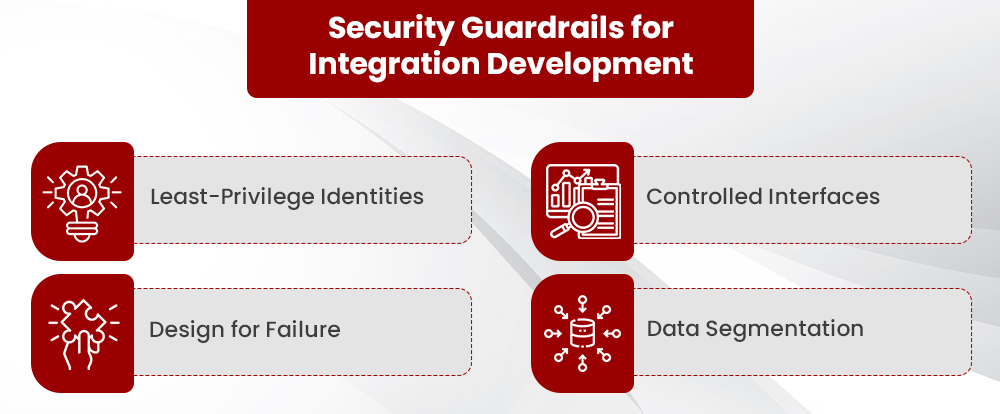
Security Guardrails for Integration Development
Integrations fail in predictable ways: weak authorization and credentials scattered across scripts. To survive audits and upgrades, these guardrails are non-negotiable:
- Least-Privilege Identities: Use dedicated integration users with the absolute minimum permissions required. This limits the "blast radius" of any potential issue.
- Controlled Interfaces: Use managed credentials and defined APIs. If your secrets are hard-coded in logic, you don't have an integration; you have a security leak.
- Design for Failure: Treat errors as a norm. Implement retries with backoff, dead-letter handling for failed transactions, and automated alerting tied to data ownership.
- Data Segmentation: Sensitive workflows like HR, Finance, or Security should never share integration identities. Stricter boundaries should be the default, not a "phase two" project.
Data Integrity in IT Service Management
A clean integration is useless if it produces cluttered data. To protect your ecosystem, data quality must be an architectural requirement.
- Normalize Definitions Upfront: If "Critical" in a monitoring tool doesn't map to "P1" in ServiceNow, the integration provides no value. Align your status mappings before the first record moves.
- Enforce Master System Logic: If two systems can create the same object, define the master and enforce it through robust identification and reconciliation rules.
- Reference Over Sync: Whenever possible, use Remote Tables to reference data rather than duplicating it. This keeps your platform fast and your data current.
- Treat Transforms as Product Logic: Document and version your mapping rules. When a dashboard breaks six months from now, you need to be able to trace the logic back to the source.
That’s how you protect trust in dashboards, SLAs, and operational decisions.
Where inMorphis fits for IT ServiceManagement + ServiceNow Developer teams
As a ServiceNow Elite Partner, inMorphis focuses on the tangible business outcomes that allow teams to scale without the friction of technical debt.
Integration Strategy that Stays Maintainable
Instead of chasing one-off connections, the focus is usually on building integration patterns that can survive platform changes—clear ownership, reusable patterns, and fewer “tribal knowledge” dependencies.
Implementation that Balances Speed with Control
Teams often need to move quickly without turning the platform into patchwork. The more defensible path is to prioritize config-first capabilities (prebuilt spokes, Flow Designer patterns, API tooling) and reserve custom build for cases where it’s genuinely required.2
Operating Model Support
Real integration success shows up after launch: incidents, retries, data drift, security reviews, change management, and reporting. inMorphis’ emphasizes helping teams build the guardrails and operating rhythms needed for long-term stability, not just an initial release.
Further reading for developers: Role of a ServiceNow Developer.
The Future of the Connected Enterprise
Today, ServiceNow integration development has shifted from a technical "nice-to-have" to the enterprise’s literal nervous system. For ServiceNow Developers and IT leaders alike, the mandate is clear: stop building bridges that require constant repair and start architecting a Workflow Data Fabric that empowers every decision. Excellence in integration isn’t just a project’s milestone; it’s your competitive advantage.
The goal is a platform that doesn't just store data but orchestrates it. See how inMorphis transforms ServiceNow integration strategy.
Reference:
1. ServiceNow Integration Hub
